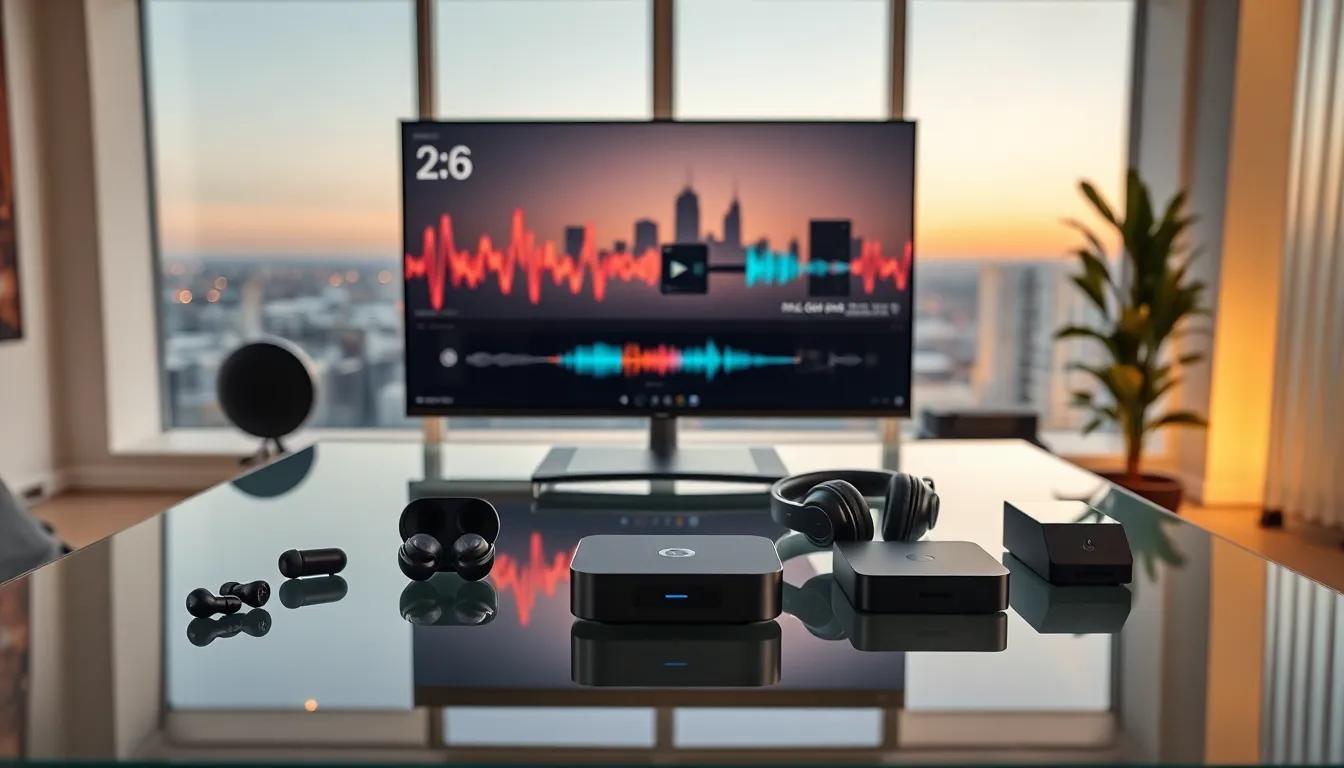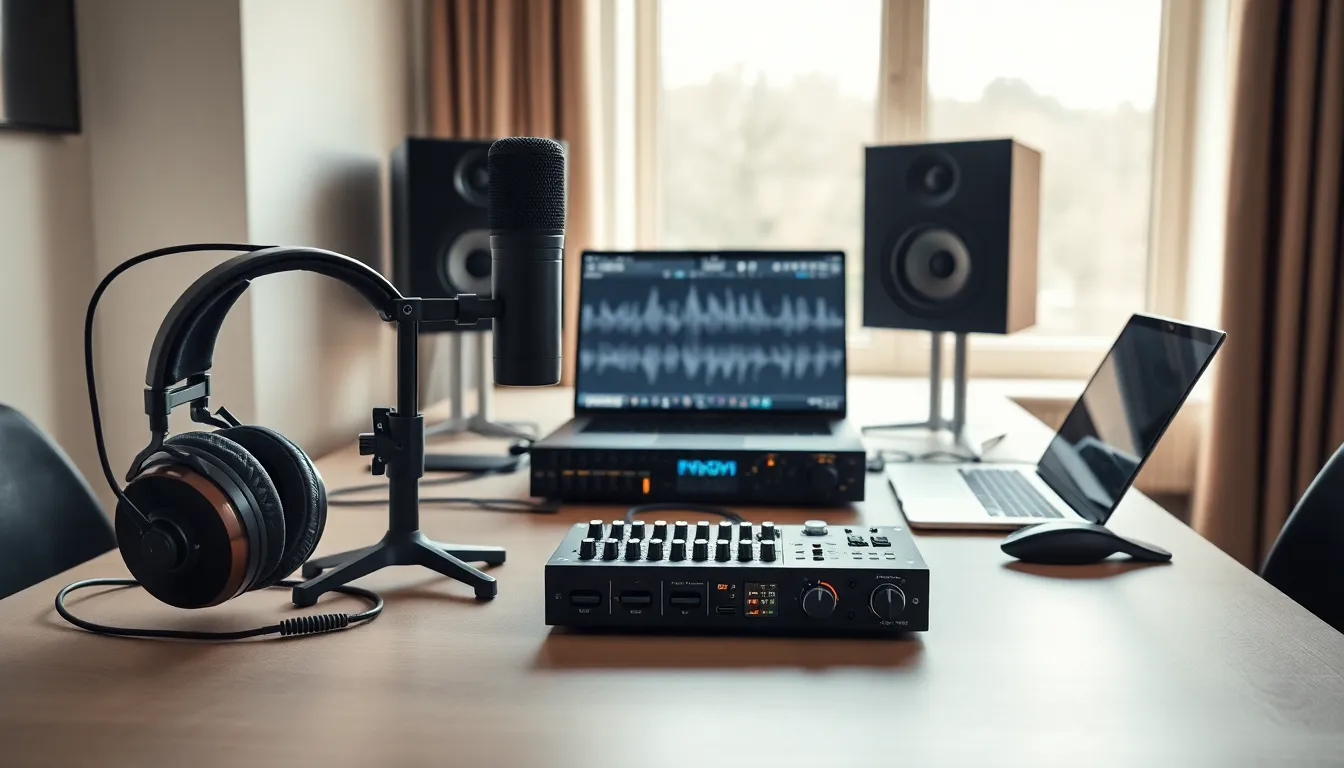
An audio technology guide helps anyone understand how sound systems work and what equipment best fits their needs. Whether someone wants better home audio, professional recording gear, or portable listening devices, the fundamentals remain the same. Sound moves through air as waves. Equipment captures, processes, and reproduces those waves. This guide breaks down how audio technology functions, explores different types of equipment, and offers practical advice for choosing the right setup. By the end, readers will have a clear picture of what matters most in audio gear and which trends are shaping the industry today.
Table of Contents
ToggleKey Takeaways
- Audio technology works through three stages—input, processing, and output—where each component directly affects your final sound quality.
- Choose speakers or headphones based on your space and use case: bookshelf speakers for small rooms, over-ear headphones for best isolation, or wireless models for convenience.
- Podcasters and content creators should pair a quality USB or XLR microphone with an audio interface for professional-sounding recordings.
- Prioritize value over price when selecting audio equipment—a $100 microphone suited to your needs outperforms a $500 mic designed for something else.
- Emerging audio technology trends like spatial audio, AI-powered noise cancellation, and lossless streaming are reshaping how we experience sound.
- Build your audio setup strategically by starting with mid-range gear and upgrading over time rather than overspending upfront.
How Audio Technology Works
Audio technology converts sound waves into electrical signals, processes them, and turns them back into audible sound. This cycle involves three main stages: input, processing, and output.
At the input stage, a microphone or other device captures sound waves. These waves create vibrations that move a diaphragm inside the microphone. The diaphragm’s movement generates an electrical signal that mirrors the original sound wave’s pattern.
Processing happens next. Equipment like mixers, amplifiers, and digital audio workstations (DAWs) modify the signal. They can boost volume, adjust frequencies, add effects, or compress dynamic range. Digital audio technology converts analog signals into binary code, allowing for precise editing and storage.
The output stage brings sound back to human ears. Amplifiers increase the signal’s power, and speakers or headphones convert electrical signals into physical vibrations. These vibrations push air molecules, creating sound waves that travel to the listener.
Understanding this audio technology chain helps buyers make smarter choices. Each component affects final sound quality. A weak link anywhere, a cheap microphone, poor processing, or low-quality speakers, degrades the entire listening experience.
Types of Audio Equipment
Audio equipment falls into several categories based on function. This audio technology guide covers the most common types people encounter.
Speakers and Headphones
Speakers and headphones serve as output devices. They convert electrical signals into sound waves people can hear.
Speakers come in many forms. Bookshelf speakers work well for small rooms and offer balanced sound at moderate volumes. Floor-standing speakers deliver more bass and higher volume for larger spaces. Soundbars provide a space-saving option for TV audio. Studio monitors produce flat, accurate sound that professionals need for mixing and mastering.
Headphones offer private listening and come in three main styles. Over-ear headphones cover the entire ear and typically provide the best sound isolation and quality. On-ear headphones rest on the ear and balance portability with decent audio. In-ear monitors (IEMs) fit inside the ear canal and work great for portable use or stage monitoring.
Wireless headphones have become popular thanks to Bluetooth technology. They sacrifice some audio quality for convenience, though high-end models now support codecs like aptX and LDAC that minimize this gap.
Microphones and Recording Devices
Microphones capture sound. Different types serve different purposes in audio technology applications.
Dynamic microphones handle high sound pressure levels well. They work best for live performances and loud instruments like drums and guitar amps. They don’t need external power and tend to be durable.
Condenser microphones capture more detail and higher frequencies. They require phantom power (usually 48V) and excel at recording vocals, acoustic instruments, and podcasts. Large-diaphragm condensers dominate studio vocal recording, while small-diaphragm versions capture cymbals and acoustic guitars accurately.
Ribbon microphones produce a warm, vintage sound. They’re fragile and expensive but prized for certain recording applications.
Audio interfaces connect microphones to computers. They convert analog signals to digital and provide preamps to boost microphone signals. Portable recorders offer an all-in-one solution for field recording, combining microphones, preamps, and storage in a single device.
Choosing the Right Audio Setup for Your Needs
Selecting audio technology depends on intended use, budget, and space. A home listener needs different gear than a podcaster or musician.
For casual home listening, a quality pair of headphones or a 2.1 speaker system (two speakers plus a subwoofer) provides good results without very costly. Most people notice diminishing returns above the $200-$300 range for headphones. Powered speakers eliminate the need for a separate amplifier.
Home theater setups benefit from 5.1 or 7.1 surround sound systems. These include a center channel for dialogue, front and rear speakers for spatial effects, and a subwoofer for bass. Soundbars with virtual surround processing offer a simpler alternative.
Podcasters and content creators should invest in a decent USB microphone or an XLR microphone paired with an audio interface. The Shure SM7B and Audio-Technica AT2020 remain popular choices. Closed-back headphones help monitor recordings without sound leaking into the microphone.
Musicians need audio technology matched to their instruments and recording goals. A basic home studio requires an audio interface with enough inputs, studio monitors positioned correctly, and acoustic treatment to control room reflections. Starting with mid-range gear and upgrading strategically makes more sense than buying expensive equipment all at once.
Budget matters, but value matters more. A $100 microphone that fits the use case beats a $500 microphone designed for something else. Research specific needs before shopping.
Emerging Trends in Audio Technology
Audio technology continues to advance in several directions. These trends shape what consumers and professionals will use in coming years.
Spatial audio has gained momentum. Apple’s implementation in AirPods and services like Dolby Atmos Music create three-dimensional soundscapes. Listeners experience music positioned around them rather than just left and right. This technology requires compatible playback devices and content mixed specifically for spatial formats.
AI-powered audio processing now appears in consumer products. Noise cancellation algorithms have improved dramatically. Some headphones and earbuds adapt their sound profile based on ear shape and listening environment. AI also assists music production, offering automatic mixing suggestions and isolating individual instruments from mixed recordings.
Lossless audio streaming has become mainstream. Services like Apple Music, Amazon Music, and Tidal offer CD-quality or better streams. This matters for listeners with capable audio technology who want full detail from their music.
Sustainability concerns influence product design. Manufacturers explore recyclable materials, longer product lifespans, and repairable designs. Some companies now offer battery replacement programs for wireless headphones instead of treating them as disposable.
Wireless audio quality keeps improving. New Bluetooth codecs reduce latency and increase bandwidth. LE Audio, part of Bluetooth 5.2, promises better efficiency and enables audio sharing between devices.