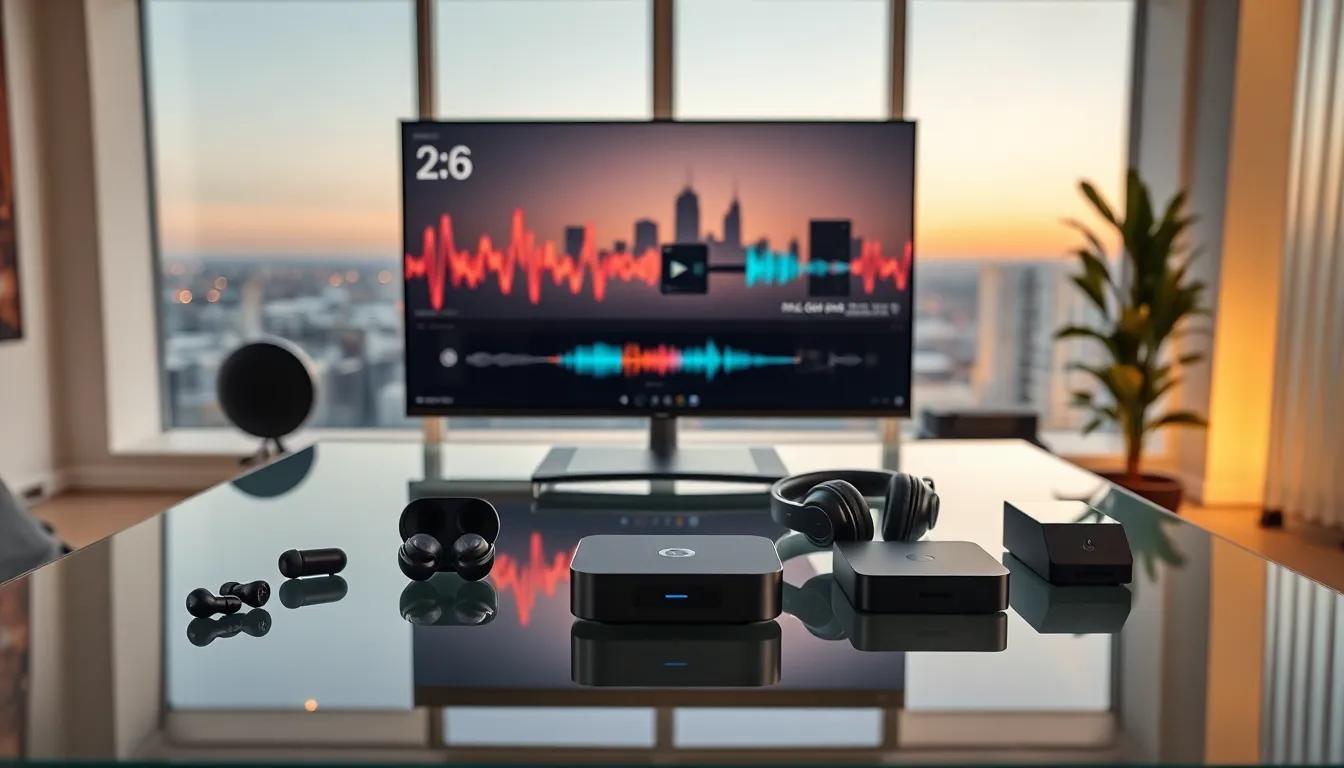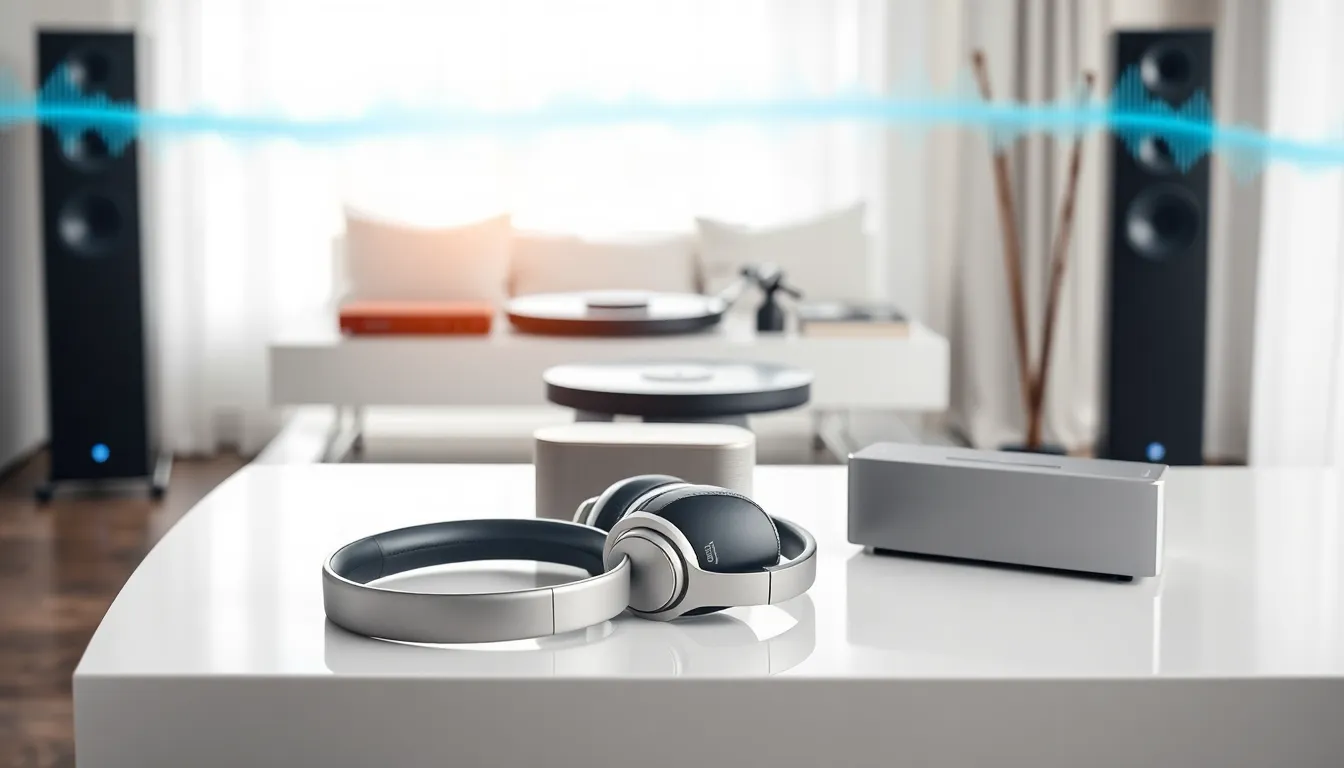
Audio technology shapes how people experience music, movies, podcasts, and everyday communication. From the crackle of early phonographs to today’s high-resolution streaming, sound systems have transformed dramatically. This guide explores the evolution, components, and future directions of modern audio technology. Whether someone is building a home theater or simply curious about how speakers work, understanding these fundamentals helps them make smarter choices and appreciate sound on a deeper level.
Table of Contents
ToggleKey Takeaways
- Audio technology has evolved from Edison’s 1877 phonograph to today’s lossless streaming and wireless devices, driven by listener demand for better sound.
- Modern audio systems require balanced components—source devices, amplifiers, speakers, and DACs—to achieve optimal sound quality.
- Digital audio offers consistency and convenience, while analog formats like vinyl provide a unique warmth that continues to attract enthusiasts.
- Spatial audio and AI-powered sound processing are transforming how listeners experience immersive, personalized audio technology.
- Lossless streaming services now make high-resolution audio accessible to mainstream audiences as internet speeds improve.
- Sustainability is becoming a priority, with modular designs and recycled materials shaping the future of audio technology products.
How Audio Technology Has Evolved Over Time
Audio technology began with Thomas Edison’s phonograph in 1877. That device recorded sound onto tinfoil cylinders, a far cry from today’s wireless earbuds. By the early 1900s, gramophones and vinyl records became household staples. These analog systems captured sound waves directly, preserving music in physical grooves.
The mid-20th century brought magnetic tape recording. Studios could now edit, splice, and layer tracks. This shift gave artists creative freedom they’d never had before. The Beatles’ experimental albums? Thank tape technology for making that possible.
Transistor radios appeared in the 1950s, making audio technology portable for the first time. People carried music in their pockets decades before the iPod existed. Then came cassette tapes in the 1960s, followed by compact discs in the 1980s. CDs offered cleaner sound and greater durability than vinyl.
The digital revolution of the 1990s changed everything again. MP3 compression allowed thousands of songs to fit on small devices. Streaming services emerged in the 2000s, eliminating physical media entirely. Today, audio technology delivers lossless quality through smartphones, smart speakers, and wireless headphones.
Each generation of audio technology solved problems while creating new possibilities. Edison wanted to preserve voices. Engineers in the 1960s wanted studio flexibility. Modern developers want seamless, high-quality sound anywhere. The pattern continues, audio technology keeps advancing because listeners keep demanding more.
Key Components of Modern Audio Systems
Modern audio systems rely on several core components working together. Understanding each part helps consumers build better setups and troubleshoot problems.
Source Devices
Source devices generate or transmit audio signals. These include turntables, CD players, streaming devices, smartphones, and computers. The source determines the initial quality of the sound. A poorly encoded MP3 won’t sound great even through expensive speakers.
Amplifiers
Amplifiers boost audio signals to levels that speakers can use. Without amplification, the electrical signal from a source device would be too weak. Integrated amplifiers combine preamplification and power amplification in one unit. Separate components offer more customization for serious audiophiles.
Speakers and Headphones
Speakers convert electrical signals into sound waves. They contain drivers, small components that vibrate to produce different frequencies. Tweeters handle high frequencies. Woofers manage low frequencies. Subwoofers deliver deep bass.
Headphones work on similar principles but deliver sound directly to the ears. Open-back headphones provide a wider soundstage. Closed-back designs isolate listeners from external noise.
Digital-to-Analog Converters (DACs)
DACs translate digital files into analog signals that speakers can reproduce. Every smartphone and computer contains a basic DAC. External DACs often deliver better performance for critical listening.
Cables and Connections
Cables transmit signals between components. Optical cables, HDMI, RCA, and XLR connectors each serve different purposes. Quality cables reduce interference and signal loss. But, expensive cables don’t always mean better sound, diminishing returns apply quickly.
Audio technology works best when all components match in quality. A $2,000 amplifier paired with $50 speakers wastes potential. Balance matters more than individual specs.
Digital vs. Analog Audio: Understanding the Differences
The digital versus analog debate has passionate supporters on both sides. Each format handles audio technology differently, with distinct advantages and trade-offs.
Analog audio captures continuous sound waves. Vinyl records, for example, contain physical grooves that mirror the original waveform. This direct representation appeals to purists who value warmth and natural texture. Analog recordings don’t compress or sample the signal, they preserve it whole.
Digital audio converts sound into binary code. The process samples the waveform thousands of times per second. CD-quality audio uses 44,100 samples per second (44.1 kHz). Higher sample rates capture more detail. Modern high-resolution formats reach 192 kHz or beyond.
So which sounds better? It depends on priorities and equipment.
Digital audio technology offers consistency. A digital file sounds identical on its millionth play as it did on its first. No degradation occurs. Storage and distribution are effortless. Streaming services deliver millions of songs instantly.
Analog audio technology provides a different experience. Vinyl listeners enjoy ritual, cleaning records, dropping the needle, hearing that subtle warmth. Some argue analog captures subtle harmonics that digital sampling misses. Others say this “warmth” is actually distortion people have learned to enjoy.
Most listeners today use digital audio technology daily. Streaming dominates the market. Yet vinyl sales have grown for 17 consecutive years, suggesting analog still holds appeal.
The practical answer? Both formats deliver excellent sound with quality equipment. Personal preference, convenience, and budget guide most decisions. Audio technology in 2025 supports both approaches well.
Emerging Trends Shaping the Future of Sound
Audio technology continues advancing rapidly. Several trends will define how people experience sound in coming years.
Spatial Audio
Spatial audio creates three-dimensional soundscapes. Apple’s implementation places sounds around, above, and behind listeners. Dolby Atmos does similar work for home theaters. This audio technology makes movies and music more immersive without requiring dedicated speaker setups.
AI-Powered Sound Processing
Artificial intelligence now optimizes audio in real time. Smartphones analyze room acoustics and adjust output accordingly. Hearing aids use AI to isolate voices in crowded spaces. Music production software generates accompaniments, masters tracks, and removes background noise automatically.
Lossless Streaming
Services like Apple Music, Tidal, and Amazon Music now offer lossless streaming. These formats preserve full audio quality without compression artifacts. As internet speeds increase, lossless audio technology becomes more accessible to mainstream listeners.
Voice Interface Integration
Smart speakers have made voice control standard. Audio technology increasingly responds to spoken commands. Users play music, adjust volume, and switch sources without touching devices. This hands-free approach suits modern multitasking lifestyles.
Sustainable Audio Products
Manufacturers are rethinking materials and longevity. Modular headphones allow component replacement instead of full disposal. Recycled plastics and sustainable packaging reduce environmental impact. Consumers increasingly consider sustainability when purchasing audio technology.
These trends share a common thread: audio technology is becoming smarter, more accessible, and more personalized. The gap between professional and consumer equipment continues shrinking.