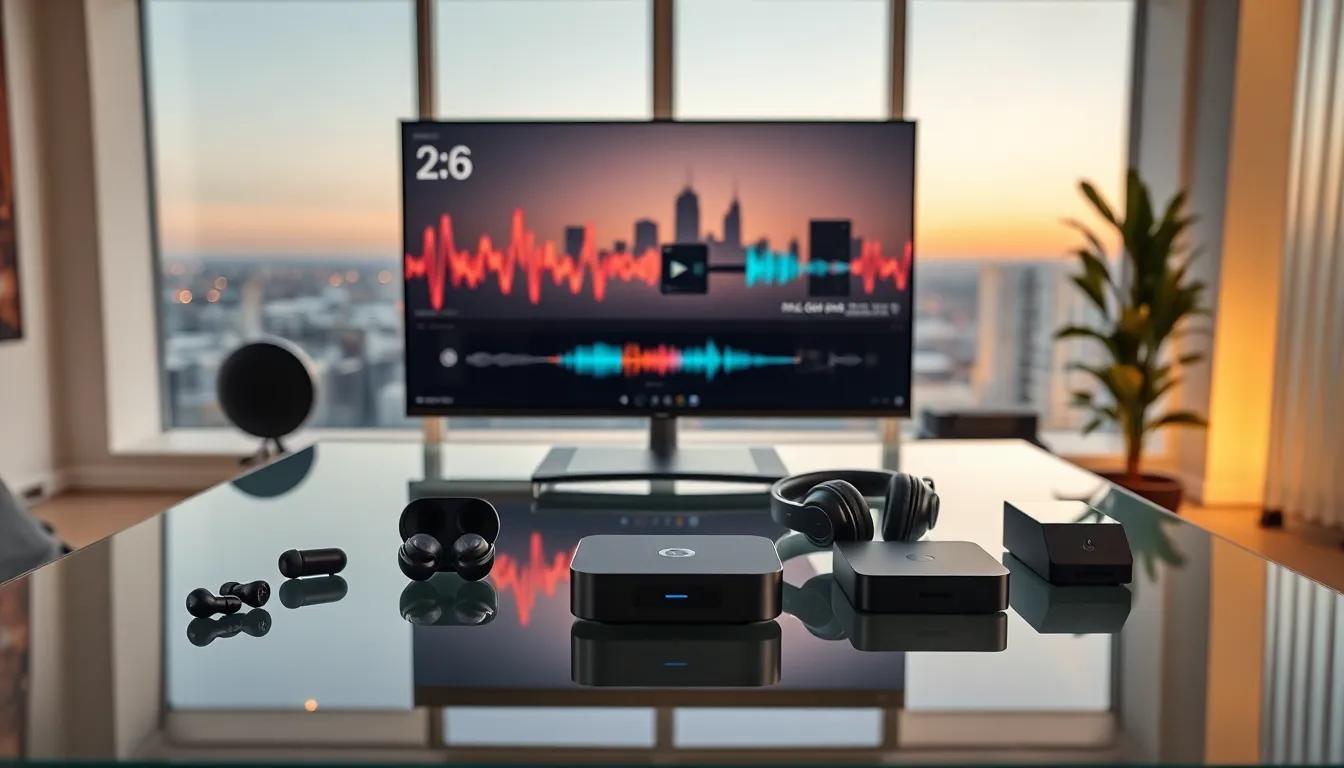
Audio technology examples surround us every day, from the wireless earbuds on a morning commute to the studio microphones that capture chart-topping albums. These devices and systems convert sound waves into electrical signals, and back again, shaping how people listen, create, and communicate.
Sound has always mattered. But the tools that capture, process, and reproduce it have changed dramatically over the past century. Today’s audio technology spans everything from affordable Bluetooth speakers to AI-powered noise cancellation. Understanding these examples helps consumers make smarter purchases and gives professionals insight into industry trends.
This article breaks down audio technology into clear categories. It covers consumer devices, professional equipment, and emerging innovations that are changing how the world experiences sound.
Table of Contents
ToggleKey Takeaways
- Audio technology examples range from everyday consumer devices like wireless earbuds and smart speakers to professional studio equipment like condenser microphones and DAWs.
- Consumer audio devices prioritize portability, ease of use, and affordability, while professional audio equipment focuses on accuracy, reliability, and advanced features.
- Emerging audio technologies include spatial audio (Dolby Atmos), AI-powered noise removal, bone conduction headphones, and lossless high-resolution streaming.
- Modern smartphones combine multiple audio technology components—microphones, speakers, processors, and wireless transmission—into a single device.
- Transparency modes and hearable devices are blurring the line between headphones and hearing aids, serving users with mild hearing loss.
What Is Audio Technology?
Audio technology refers to any device, system, or process that records, transmits, processes, or reproduces sound. It includes hardware like microphones and speakers, software like digital audio workstations, and the underlying science of acoustics.
The core purpose remains simple: move sound from one place to another, or from one moment to another. A microphone captures a voice. An amplifier boosts the signal. A speaker converts it back into audible waves. Each step relies on audio technology.
Modern audio technology examples fall into several categories:
- Recording equipment – microphones, audio interfaces, and field recorders
- Playback devices – headphones, speakers, soundbars, and home theater systems
- Processing tools – equalizers, compressors, mixers, and digital audio workstations (DAWs)
- Transmission systems – Bluetooth, Wi-Fi streaming, and broadcast radio
These categories overlap. A smartphone, for instance, contains a microphone, speaker, audio processor, and wireless transmission, all in one device. That convergence defines much of today’s audio technology landscape.
The field continues to grow as engineers find new ways to improve sound quality, reduce latency, and create immersive listening experiences. From vinyl records to spatial audio, audio technology has never stopped evolving.
Consumer Audio Devices
Consumer audio technology examples include the devices people use daily for entertainment, communication, and convenience. These products prioritize ease of use, portability, and affordability.
Wireless Earbuds and Headphones
Wireless earbuds represent one of the fastest-growing audio technology categories. Apple AirPods, Sony WF-1000XM5, and Samsung Galaxy Buds dominate the market. These devices use Bluetooth to connect to smartphones, tablets, and computers. Many include active noise cancellation (ANC), which uses microphones and processors to block external sounds.
Over-ear headphones remain popular for longer listening sessions. Models like the Sony WH-1000XM5 and Bose QuietComfort Ultra offer superior sound quality and comfort compared to smaller earbuds.
Smart Speakers
Smart speakers combine audio playback with voice assistants. Amazon Echo, Google Nest Audio, and Apple HomePod respond to voice commands and stream music from services like Spotify and Apple Music. These audio technology examples show how sound reproduction now integrates with smart home ecosystems.
Soundbars and Home Theater Systems
Soundbars provide better TV audio without the complexity of full surround sound setups. Brands like Sonos, Samsung, and LG offer models with built-in subwoofers and virtual surround processing. For more immersive experiences, home theater systems use multiple speakers placed around a room to create true surround sound.
Portable Bluetooth Speakers
Portable speakers like the JBL Flip 6 and Ultimate Ears Boom 3 let users take their music anywhere. These audio technology examples prioritize durability, battery life, and water resistance alongside sound quality.
Professional Audio Equipment
Professional audio technology examples serve musicians, podcasters, broadcasters, filmmakers, and sound engineers. These tools prioritize accuracy, reliability, and advanced features over consumer convenience.
Studio Microphones
Studio microphones capture sound with high fidelity. Condenser microphones like the Neumann U87 and Audio-Technica AT4053b excel at recording vocals and acoustic instruments. Dynamic microphones like the Shure SM7B handle louder sources and reject background noise effectively.
Different microphone types suit different applications:
| Microphone Type | Best For | Examples |
|---|---|---|
| Condenser | Vocals, acoustic instruments | Neumann U87, AKG C414 |
| Dynamic | Drums, guitar amps, podcasts | Shure SM58, Electro-Voice RE20 |
| Ribbon | Warm, vintage sound | Royer R-121, AEA R84 |
Audio Interfaces
Audio interfaces convert analog signals from microphones and instruments into digital data that computers can process. Popular audio technology examples include the Focusrite Scarlett series, Universal Audio Apollo, and MOTU interfaces. These devices determine recording quality through their preamps and converters.
Digital Audio Workstations (DAWs)
DAWs are software platforms where audio gets recorded, edited, and mixed. Pro Tools remains the industry standard for music and film. Ableton Live dominates electronic music production. Logic Pro, FL Studio, and Reaper serve millions of creators worldwide.
Studio Monitors
Studio monitors produce flat, accurate sound so engineers can make mixing decisions without coloration. Unlike consumer speakers that boost bass or treble, monitors like the Yamaha HS8 and Genelec 8040B reveal exactly what’s in a recording.
Live Sound Equipment
Concerts, conferences, and events rely on PA systems, mixing consoles, and stage monitors. Companies like QSC, Meyer Sound, and Allen & Heath provide professional audio technology for venues of all sizes.
Emerging Audio Technologies
New audio technology examples push boundaries in how people create and experience sound. Several innovations stand out in 2024 and beyond.
Spatial Audio and Dolby Atmos
Spatial audio creates three-dimensional soundscapes. Apple’s implementation tracks head movement through AirPods, adjusting the sound field as listeners turn. Dolby Atmos adds height channels to traditional surround sound, placing audio objects anywhere in a virtual space. Music streaming services now offer thousands of tracks mixed in Atmos.
AI-Powered Audio Processing
Artificial intelligence now enhances audio in real time. AI removes background noise from video calls. It separates vocals from instrumentals in existing recordings. Tools like iZotope RX use machine learning to repair damaged audio that would have been unusable years ago.
Bone Conduction Technology
Bone conduction headphones transmit sound through the skull, bypassing the eardrum. This audio technology lets runners and cyclists hear music while remaining aware of traffic. Shokz (formerly AfterShokz) leads this category with products designed for athletes and those with certain hearing impairments.
Lossless and High-Resolution Streaming
Services like Apple Music, Tidal, and Amazon Music now stream audio at CD quality or higher. These formats preserve details lost in compressed MP3 and AAC files. Audiophiles can hear the difference through quality headphones and DACs (digital-to-analog converters).
Transparent Hearing and Hearables
Modern earbuds include transparency modes that let ambient sound through. Some products blur the line between headphones and hearing aids, amplifying specific frequencies to help users hear conversations more clearly. This audio technology serves aging populations and those with mild hearing loss.