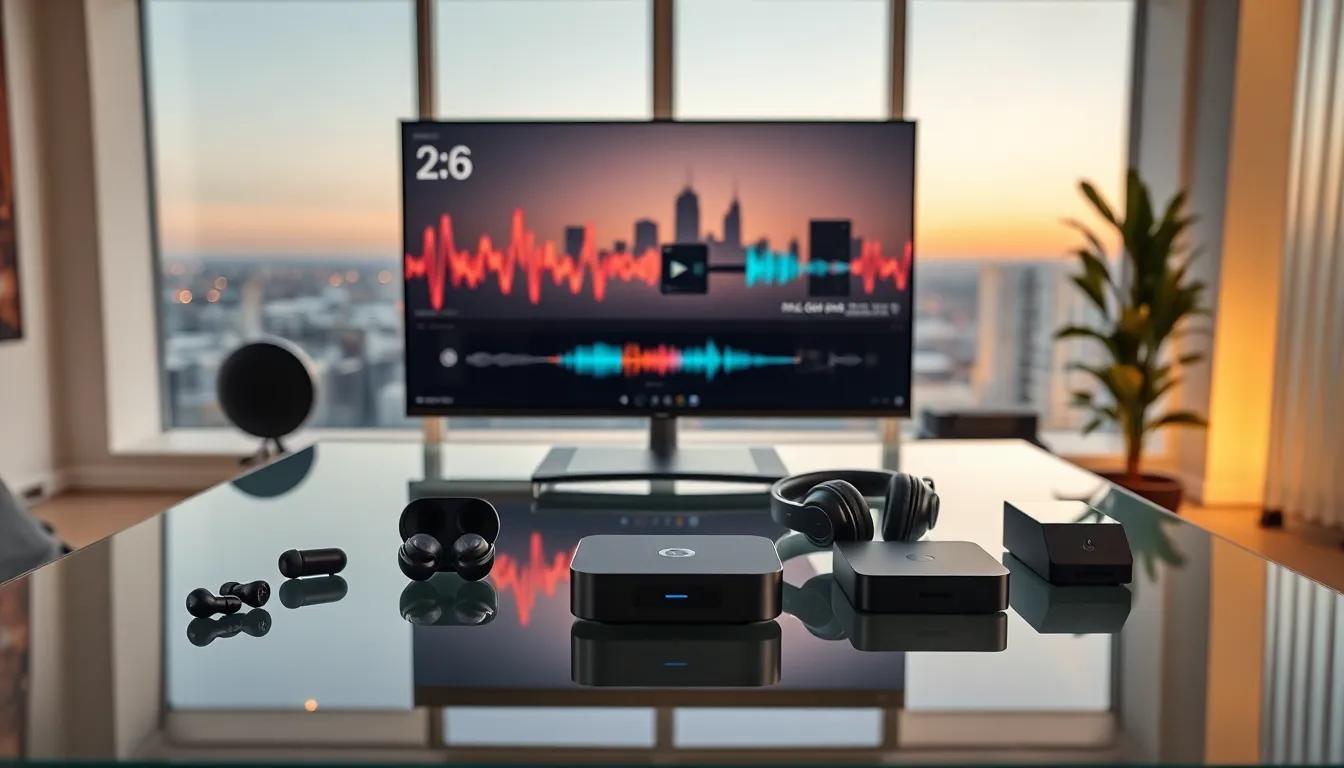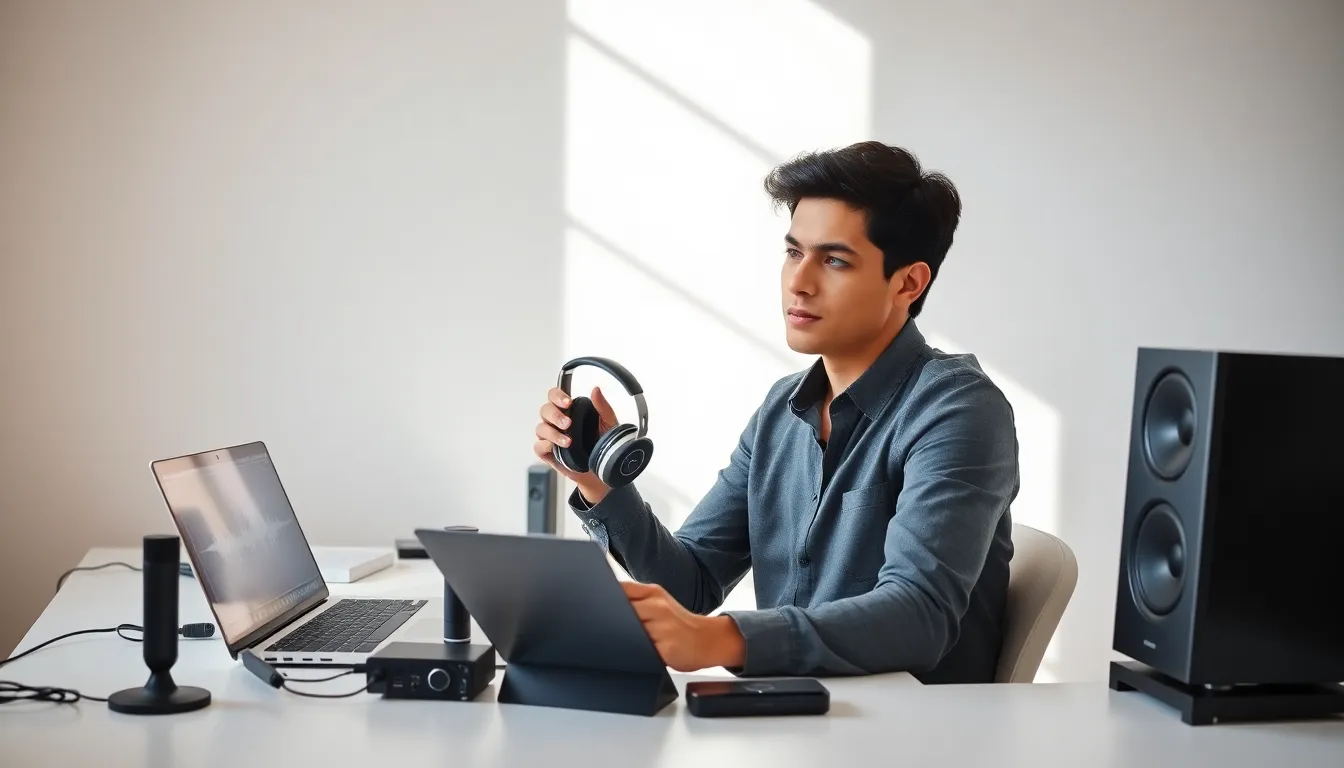
Audio technology for beginners can feel overwhelming at first glance. Speakers, headphones, DACs, amplifiers, the terminology alone might make someone want to stick with their phone’s built-in speaker. But here’s the thing: understanding audio technology doesn’t require an engineering degree. It requires curiosity and a willingness to learn the fundamentals.
This guide breaks down audio technology into digestible pieces. Readers will learn how sound actually works, what equipment matters, and how to make smart choices when building their first setup. Whether someone wants better music playback, cleaner podcast recordings, or improved gaming audio, these basics apply across the board.
Table of Contents
ToggleKey Takeaways
- Audio technology for beginners becomes manageable by learning how sound waves work—frequency, amplitude, and wavelength determine what you hear.
- Essential audio equipment includes headphones, speakers, DACs, amplifiers, microphones, and audio interfaces, each serving a specific role in the signal chain.
- Digital audio offers practical advantages like perfect copies and easy editing, while analog audio appeals to those who prefer natural warmth.
- Lossless formats (WAV, FLAC) preserve full audio quality, while lossy formats (MP3, AAC) reduce file size with minimal noticeable difference for casual listeners.
- Start your audio setup by investing in one quality piece of equipment that matches your primary use case rather than buying multiple mediocre components.
- Consider the entire signal chain—upgrading a weak DAC can improve sound quality more than expensive headphones connected to a poor source.
Understanding the Basics of Sound
Sound travels through the air as waves. These waves have specific properties that determine what people hear. Understanding these properties helps beginners make better audio technology decisions.
Frequency measures how many times a sound wave cycles per second. People measure frequency in Hertz (Hz). Human ears typically detect frequencies between 20 Hz and 20,000 Hz. Low frequencies produce bass sounds. High frequencies create treble.
Amplitude determines volume. Larger waves mean louder sounds. Audio technology measures amplitude in decibels (dB). A whisper registers around 30 dB. A rock concert hits 110 dB or higher.
Wavelength describes the physical distance between wave peaks. Bass frequencies have long wavelengths, sometimes several feet. Treble frequencies have short wavelengths measured in inches. This explains why bass sounds travel through walls more easily.
Audio technology captures, processes, and reproduces these sound waves. Microphones convert sound waves into electrical signals. Speakers and headphones convert electrical signals back into sound waves. Every piece of audio equipment performs some variation of this conversion process.
Beginners should remember one key principle: audio quality depends on how accurately equipment handles these conversions. Distortion occurs when equipment adds unwanted changes to the original sound.
Essential Audio Equipment You Should Know
Audio technology for beginners starts with understanding core equipment categories. Each piece serves a specific function in the audio chain.
Headphones and Speakers
These output devices convert electrical signals into audible sound. Headphones sit on or in the ears. Speakers project sound into a room. Both use drivers, small components that vibrate to create sound waves.
Headphones come in three main styles:
- Over-ear: Cover the entire ear, often provide best sound quality
- On-ear: Rest on the ear, more portable
- In-ear: Fit inside the ear canal, most compact
Digital-to-Analog Converters (DACs)
DACs translate digital audio files into analog signals. Every device with a headphone jack contains a DAC. Standalone DACs often provide cleaner conversions than built-in options. Beginners exploring audio technology frequently upgrade their DAC first.
Amplifiers
Amplifiers increase signal strength. They provide the power headphones and speakers need to produce sound at proper volume levels. Some headphones require dedicated amplifiers. Others work fine with standard outputs.
Microphones
Microphones capture sound waves and convert them to electrical signals. Dynamic microphones handle loud sources well. Condenser microphones offer greater sensitivity for detailed recordings. USB microphones connect directly to computers, a popular choice for beginners.
Audio Interfaces
These devices connect microphones and instruments to computers. They contain DACs, analog-to-digital converters (ADCs), and preamps in one unit. Podcasters, musicians, and content creators rely on audio interfaces daily.
Digital vs. Analog Audio Explained
Audio technology divides into two fundamental categories: digital and analog. Both have strengths. Understanding their differences helps beginners choose appropriate equipment.
Analog audio exists as continuous electrical signals. Vinyl records and cassette tapes store analog audio. The signal directly represents the original sound wave’s shape. Analog equipment handles audio without converting it to numbers.
Digital audio represents sound as numerical data. Computers sample the analog signal thousands of times per second. Each sample captures the signal’s amplitude at that instant. CDs sample audio 44,100 times per second (44.1 kHz). Higher sample rates capture more detail.
Digital audio technology offers practical advantages:
- Files copy perfectly without degradation
- Storage costs less than physical media
- Editing happens non-destructively
- Streaming becomes possible
Analog audio has its own benefits:
- Some listeners prefer its natural warmth
- No digital artifacts or aliasing
- Simpler signal path in some cases
Most modern audio technology combines both formats. A smartphone stores digital files, converts them through a DAC, and sends analog signals to headphones. This hybrid approach leverages each format’s strengths.
Beginners shouldn’t worry too much about the analog versus digital debate. Quality exists in both formats. The equipment’s design and build matter more than the format itself.
Common Audio Formats and File Types
Audio technology for beginners requires familiarity with file formats. Different formats serve different purposes. Some prioritize quality. Others prioritize small file sizes.
Lossless Formats
These formats preserve all original audio data:
- WAV: Uncompressed audio. Large files. Universal compatibility. Professional studios use WAV for recording and mixing.
- FLAC: Compressed without losing data. Files are 50-60% smaller than WAV. Popular among audiophiles.
- ALAC: Apple’s lossless format. Works seamlessly with Apple devices and iTunes.
Lossy Formats
These formats remove some audio data to reduce file size:
- MP3: The most recognized audio format. Files are roughly 10% the size of WAV files. Quality depends on bitrate, 320 kbps sounds better than 128 kbps.
- AAC: Apple’s preferred lossy format. Slightly better quality than MP3 at the same bitrate.
- OGG: Open-source format. Spotify uses OGG for streaming.
Which Format Should Beginners Choose?
For casual listening, 256 kbps AAC or 320 kbps MP3 provides excellent quality. Most people cannot distinguish these from lossless files during normal listening.
For archiving music collections, FLAC makes sense. It preserves full quality while saving storage space compared to WAV.
Audio technology continues evolving. New formats emerge regularly. But understanding the lossless versus lossy distinction helps beginners evaluate any format they encounter.
Tips for Building Your First Audio Setup
Building an audio technology setup requires planning. These practical tips help beginners avoid common mistakes and get better results from their budget.
Start with one quality piece. A great pair of headphones makes a bigger difference than multiple mediocre components. Identify the most important element for personal use and invest there first.
Match equipment to intended use. Gaming headsets prioritize microphone quality and positional audio. Studio monitors deliver flat, accurate sound for mixing. Bluetooth speakers offer portability. Define the primary use case before shopping.
Consider the full signal chain. Great headphones connected to a weak source sound mediocre. Audio technology works as a system. Each component matters. A $50 DAC upgrade might improve sound more than spending $200 on new headphones.
Read reviews from multiple sources. Individual opinions vary. Look for consistent praise or criticism across several reviews. Pay attention to reviewers who test equipment in conditions similar to intended use.
Don’t chase specifications blindly. Frequency response graphs and impedance ratings matter, but they don’t tell the whole story. Two headphones with identical specs can sound completely different. Trust ears over numbers.
Buy used when appropriate. Quality audio technology lasts for years. Used headphones, DACs, and speakers often sell for 40-60% of retail price. Check reputable resale platforms.
Give equipment time. New audio technology sometimes sounds different at first. Ears need time to adjust. Listen for at least a week before judging purchases.